
Kiltan Island
A coral jewel in the heart of the Arabian Sea — Kiltan is one of Lakshadweep's most unspoiled inhabited islands, where ancient traditions, pristine reefs, and a warm community spirit define everyday life.
Where the Ocean Shapes Every Life
Kiltan is a small, elongated coral island in the Amindivi group of Lakshadweep, lying approximately 220 kilometres west of Kochi. Covering just 4.22 square kilometres, it is one of the more densely populated islands in the archipelago — a testament to the warmth and resilience of its people.
The island is shaped like a crescent, with a calm, shallow lagoon on its western side and the open Arabian Sea on the east. Coconut palms cover nearly every inch of land, and the air carries the constant scent of salt and brine. Life here moves to the rhythm of the tides — fishing boats leave before dawn and return by mid-morning, and the afternoons belong to the community.
Kiltan has no airport and no tourist resort. It is reached only by the government passenger ships that connect the Lakshadweep islands to Kochi — a journey of roughly 18 to 20 hours. This relative inaccessibility has preserved its character: Kiltan remains one of the most authentic, unhurried islands in the entire archipelago.
Quick Facts
- Island group
- Amindivi
- Area
- 4.22 sq km
- Population
- ~3,800
- Language
- Jeseri (Mahl dialect)
- Religion
- Islam (100%)
- Literacy rate
- ~95%
- Main occupation
- Fishing & coir
- How to reach
- Passenger ship from Kochi

What Makes Kiltan Special

The Lagoon
Kiltan's western lagoon is a sheltered expanse of shallow, crystal-clear water — perfect for swimming, wading, and watching the sunset paint the sky in shades of gold and rose. The lagoon floor is sandy and gentle, making it safe even for children.

Coral Reefs
The fringing reefs around Kiltan are among the healthiest in Lakshadweep. Snorkelling reveals a world of staghorn and brain corals, parrotfish, surgeonfish, and the occasional sea turtle gliding through the blue.

Coconut Groves
The island is blanketed in coconut palms — the backbone of Kiltan's economy. Walking through the groves at dawn, with light filtering through the fronds and the sound of the sea never far away, is one of the island's quiet pleasures.

Traditional Mosques
Kiltan has several mosques that serve as the spiritual and social heart of the community. Built in the traditional Lakshadweep style with whitewashed walls and carved wooden interiors, they are places of quiet beauty and deep community life.
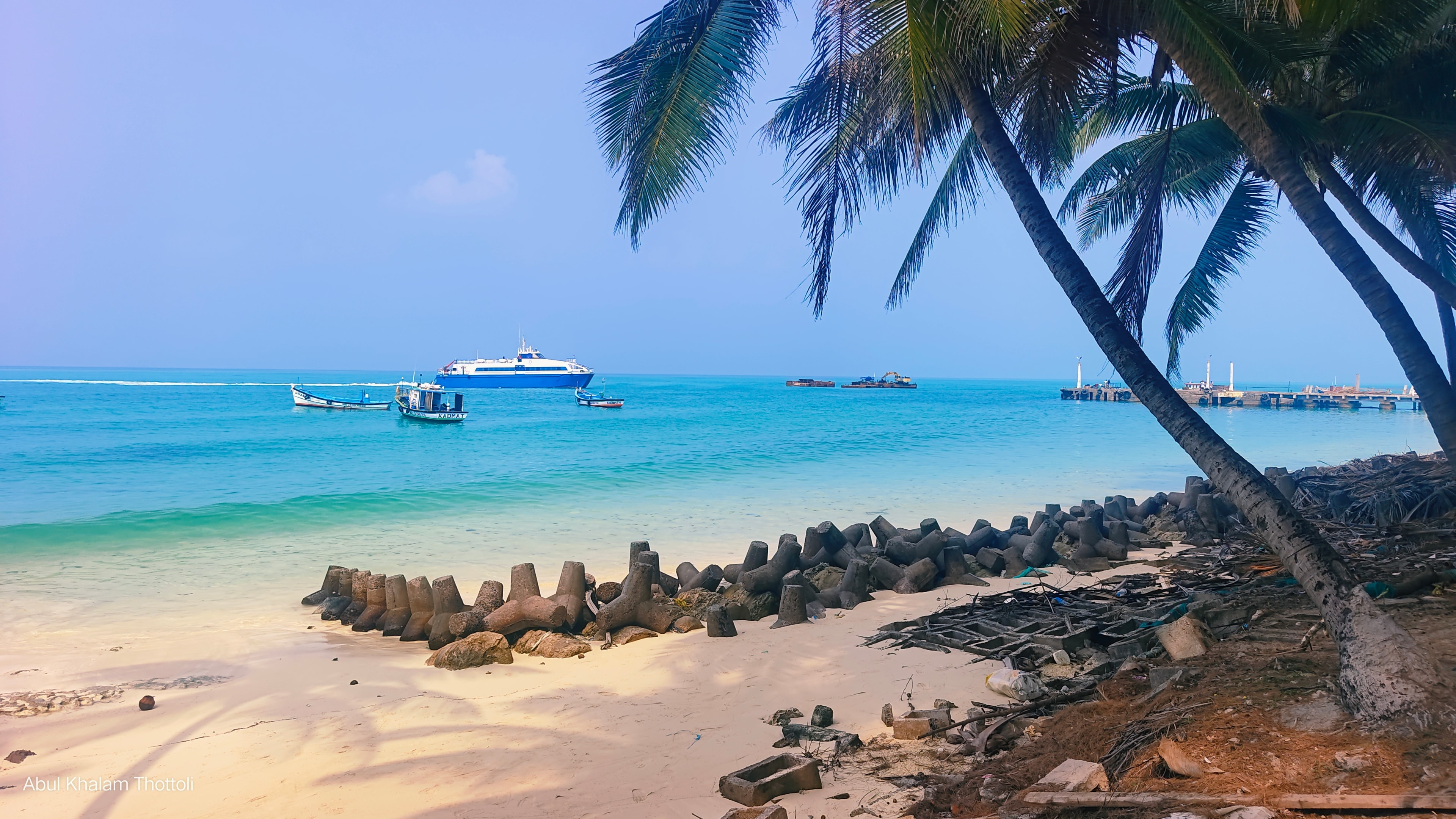
Fishing Culture
Pole-and-line tuna fishing is Kiltan's lifeblood. The island's fishermen are renowned across Lakshadweep for their skill — heading out in traditional wooden boats (odams) before sunrise and returning with skipjack tuna that feeds both the island and the mainland.

Coir Weaving
The women of Kiltan are master coir weavers. Coconut husks are soaked, beaten, and spun into rope and mats using techniques passed down through generations. Coir products from Kiltan are sold across Lakshadweep and the Kerala coast.
A Community Rooted in Faith and the Sea
Kiltan's people are entirely Muslim, descendants of Arab traders and indigenous islanders who intermingled over centuries. The community is matrilineal in its social structure — property and family identity pass through the mother's line, a tradition unique to Lakshadweep and distinct from mainland India. The island has a remarkably high literacy rate, and education is deeply valued. Many of Kiltan's sons and daughters have gone on to serve in the Indian Navy, civil services, and academia — yet most maintain a deep bond with the island and return for festivals and family occasions.
Kolkali
A traditional folk dance performed with sticks, Kolkali is a fixture at weddings and festivals. Dancers move in a circle, striking their sticks together in rhythmic patterns to the beat of drums.
Parichakali
A martial art-inspired dance performed with shields and swords, Parichakali is one of Lakshadweep's most distinctive art forms and is performed with great pride on Kiltan.
Oppana
A celebratory song-and-dance form performed at weddings, Oppana features women clapping and singing in call-and-response style around the bride. It is a joyful, communal tradition.
Eid Celebrations
Eid ul-Fitr and Eid ul-Adha are the island's grandest celebrations — the entire community gathers for prayers, feasting, and festivities that last for days, with homes open to all visitors.
Taste of Kiltan
Food on Kiltan is simple, fresh, and deeply satisfying. Every meal is built around the day's catch and the coconut palm — the two pillars of island life.
Mas Curry
Freshly caught tuna cooked in a thick coconut milk gravy with turmeric, dried chilli, and curry leaves. The Kiltan version is slightly drier and more intensely spiced than the Kavaratti style — a reflection of the island's own culinary identity.
Kandan Kanji
A thick, nourishing rice porridge cooked with coconut milk and served with pickled fish. The fishermen's breakfast — eaten before the boats go out — and one of the most comforting dishes on the island.
Tuna Pickle
Smoked and pickled tuna preserved in coconut oil with spices — a Kiltan speciality that keeps for weeks and is carried by islanders when they travel to the mainland as a taste of home.
Coconut Halwa
A dense, sweet confection made from freshly grated coconut, jaggery, and ghee — prepared for festivals and special occasions. Every family has its own recipe, and the variations are a source of gentle island pride.
How to Visit
Kiltan is not a tourist island in the conventional sense — there are no resorts, no beach clubs, and no organised tours. What it offers instead is something rarer: a genuine glimpse into island life as it has been lived for centuries.
Entry Permit Required
All visitors to Kiltan need an Entry Permit from the Lakshadweep Administration. Indian nationals can apply through the official portal. Permits are granted for specific islands — ensure Kiltan is listed. Apply at least 30 days in advance.
Getting There
The only way to reach Kiltan is by passenger ship from Kochi (Willingdon Island). The MV Kavaratti and other vessels of the Lakshadweep Administration serve Kiltan on a rotating schedule. The journey takes approximately 18–20 hours.
Best Time to Visit
October to April is ideal — the sea is calm, the sky is clear, and the lagoon is at its most inviting. Avoid May to September when the southwest monsoon makes sea travel difficult and the island largely inaccessible.
Where to Stay
There are no hotels on Kiltan. Accommodation is through the Lakshadweep Tourism guesthouses or homestays arranged through local contacts. The experience of staying with an island family is one of the most memorable aspects of a Kiltan visit.
Respect Local Culture
Kiltan is a conservative Muslim community. Dress modestly, especially near mosques and residential areas. Alcohol is prohibited on the island. Visitors are warmly welcomed when they approach with genuine curiosity and respect.
What to Do
Snorkelling on the reef, walking the lagoon shore at low tide, watching the fishing boats return at dawn, visiting the mosques, and simply sitting with the community — these are the pleasures Kiltan offers.
Plan Your Visit to Kiltan
Permits, ship schedules, and everything you need to reach this extraordinary island.